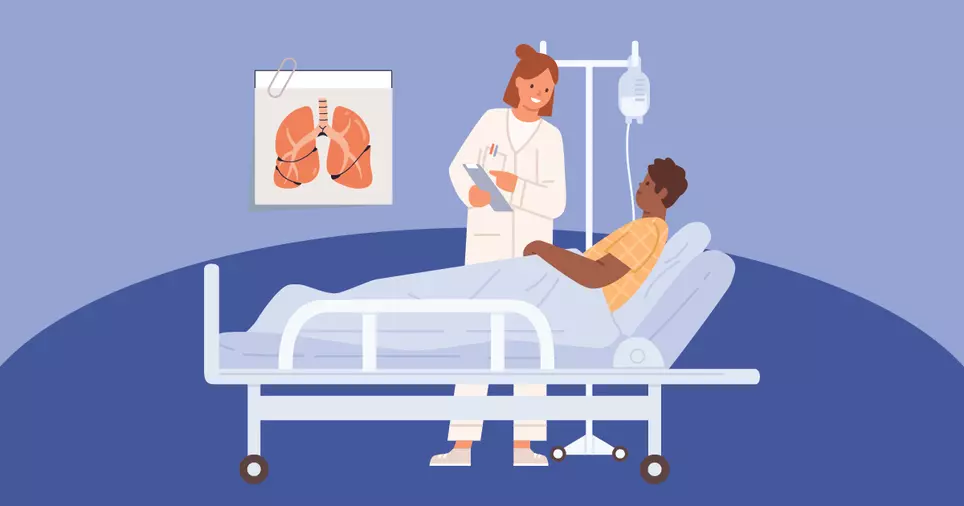
Immediately after pneumonectomy surgery, you'll wake up in a recovery room where you'll receive pain medication and oxygen. Once stable, you'll move to a hospital room for several days of monitoring. During this time, you'll be given breathing exercises to strengthen your remaining lung and help remove fluid that collected Show Full Answer
Immediately after pneumonectomy surgery, you'll wake up in a recovery room where you'll receive pain medication and oxygen. Once stable, you'll move to a hospital room for several days of monitoring. During this time, you'll be given breathing exercises to strengthen your remaining lung and help remove fluid that collected during surgery.
You can expect some soreness since the surgery involves cutting through major chest structures. Your healthcare team will provide pain medication to help manage this discomfort. Fatigue is also common as your body recovers from this intensive procedure, but strength typically returns over several weeks. After recovery, your remaining healthy lung will adapt to perform the functions that both lungs did before. While the remaining lung may expand into the space where the other lung was, your lung capacity will be about half of what it was previously. This is typically enough for normal daily activities, though you may:
- Get out of breath more easily
- Become fatigued more quickly
- Experience more severe symptoms if you develop respiratory infections
- Find swimming challenging due to changes in how your body floats
Many people adjust well to life with one lung, though it may take time for your body to adapt to its new normal.
May 7, 2025
I forgot to say that the swelling happened in hospital on the fifth day of recovery,
May 14, 2025
After a pneumonectomy if the patient’s leg becomes swollen and his white blood is out of whack, is it something that is treatable? How will they bring the swelling down?
May 14, 2025








 Join
Join



 Your Privacy Choices